
Can Core Engineers Build a Career in AI Without Coding?
Imagine two engineering graduates interviewing for jobs in the AI economy. One is a computer science graduate who can train a machine learning model. The other is a mechanical engineer who understands how to remove heat from high-density computing equipment. Both could contribute to the same AI service, even though their daily responsibilities might look completely different.
For years, discussions about technology careers have encouraged students to move towards software. The rise of AI has made that advice even more common. Yet the expansion of artificial intelligence is creating a parallel industrial challenge: building reliable computing infrastructure to support it. Before an AI model can answer a question, electricity must reach the servers, chips must be manufactured, heat must be removed and facilities must remain operational.
Three kinds of professionals powering the AI economy
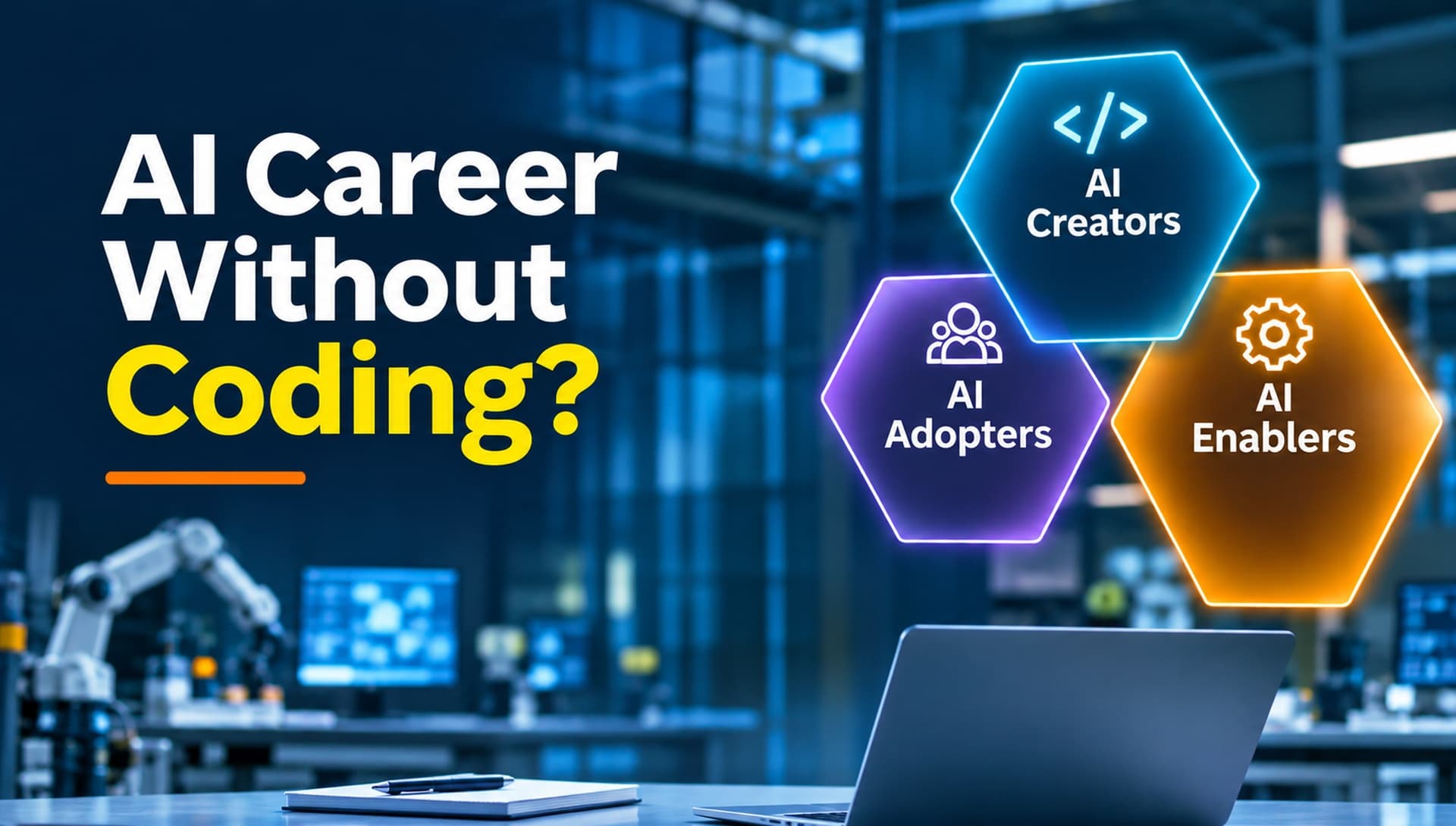
One way to understand the career landscape is to distinguish three complementary categories. AI Creators develop models, algorithms and software. AI Adopters use that intelligence to improve decisions, products and services in industries such as banking, healthcare and manufacturing. AI Enablers build and operate the physical systems on which both groups depend.
These categories are an Omnivance analytical framework, not official occupational classifications. A person can occupy more than one category. An electrical engineer who designs power distribution for a data centre and later uses predictive analytics to improve its reliability is both an enabler and an adopter.
Consider a company planning to deploy an AI-powered customer service application. Its software team can develop the application, and its customer experience team can redesign the service process. But the computing capacity behind the application depends on servers, networks, power distribution and cooling. If a facility cannot support the required electrical load, adding more software developers will not remove that constraint. Understanding this physical dependency opens a wider range of possibilities for core engineering students.
Mechanical engineering: keeping AI cool
A mechanical engineer may not immediately associate thermodynamics with artificial intelligence. Yet every operating server converts much of its electrical input into heat. If that heat is not removed effectively, equipment may operate less efficiently, reduce its computing performance or shut down.
As computing density increases, engineers must evaluate alternatives such as conventional air cooling, direct-to-chip liquid cooling and engineered heat rejection systems. Vertiv and Schneider Electric are examples of businesses students can investigate to understand the thermal infrastructure ecosystem. The engineering decision is not merely which technology cools best; it is which design balances equipment requirements, maintenance, energy consumption, water availability and cost.
Potential career pathways include thermal design engineer, HVAC engineer, mechanical commissioning engineer and critical facilities engineer. Mechanical graduates can build on fluid mechanics, heat transfer and thermodynamics by learning computer-aided design, equipment selection and building management systems.
Electrical engineering: powering AI
A data centre requires dependable power at the appropriate voltage and quality, even when the external supply is interrupted. Transformers, switchgear, protection systems, uninterruptible power supplies and backup generation work together to support continuity. ABB and Eaton are useful starting points for exploring the equipment value chain.
Consider an illustrative facility with a steady 10 MW IT load and a power usage effectiveness (PUE) of 1.4. Its total facility load would be 14 MW. Reducing PUE to 1.25 at the same IT load would reduce total load to 12.5 MW, a difference of 1.5 MW. Actual outcomes depend on operating conditions and design. The example shows how conventional engineering choices can influence the economics of expensive AI assets.
Electrical design, protection, testing, commissioning and energy management are relevant career pathways. Reading single-line diagrams and understanding electrical safety are valuable foundations; advanced software skills may be useful but do not replace them.
Electronics engineering: building AI hardware
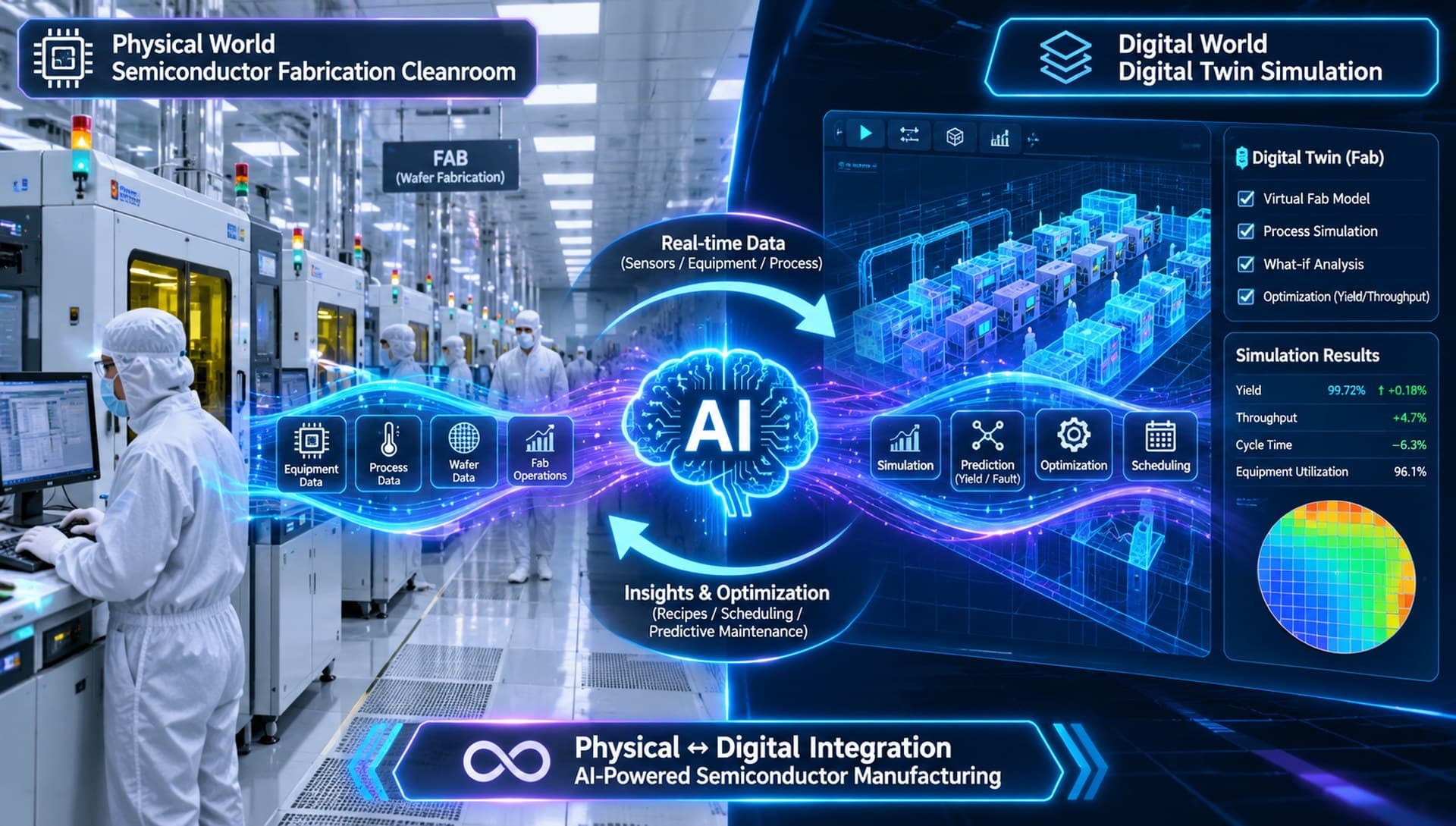
An AI model needs physical computing devices. Before a processor reaches a server, semiconductor companies must design, manufacture, package and test it. Memory, circuit boards, networking hardware and power electronics must also function as an integrated system.
Electronics graduates can explore hardware validation, semiconductor testing, embedded systems, instrumentation and semiconductor packaging. NVIDIA and AMD provide examples of the computing hardware segment, while Micron illustrates the importance of memory. Their businesses are different, but each helps students understand a particular part of the computing value chain.
Some roles are highly software-intensive; others emphasise circuit behaviour, laboratory measurement, manufacturing processes and reliability. Students should examine the requirements of individual jobs rather than assume that all semiconductor work is coding-free.
Chemical engineering: materials and processes
Chemical engineers enter this story through materials and industrial processes. Semiconductor fabrication involves processes such as deposition, etching and cleaning, where control of materials, purity and process conditions matters. Facilities also need water treatment and responsible handling of process chemicals. Applied Materials is an example of a company to research when exploring the manufacturing equipment ecosystem.
Potential pathways include process engineering, materials engineering, manufacturing quality, environmental engineering and ultrapure water systems. Relevant foundations include mass transfer, process control, chemical safety and statistical quality management. These are specialised environments, and an undergraduate degree alone may not meet every employer's requirements. Targeted training and practical experience can help graduates bridge that gap.
Civil engineering: creating the physical environment
A data centre is a major construction project before it becomes a digital service. Civil engineers must consider the suitability of the site, structural loading, foundations, drainage and the coordination of utility connections. Mechanical and electrical installations must fit within a facility that can be operated and maintained safely.
Imagine discovering that a planned equipment delivery requires a change in structural design after procurement has begun. Resolving that problem might involve redesign, supplier coordination, schedule changes and cost management. The ability to anticipate such interfaces is a valuable engineering capability.
Civil graduates can explore structural design, building information modelling (BIM), construction planning, project controls and mission-critical facility delivery. They should look beyond traditional residential construction towards industrial and infrastructure projects.
Industrial engineering: turning investment into capacity
Industrial engineers connect the many activities needed to turn equipment and materials into productive capacity. A facility can be structurally complete yet unable to operate because an essential electrical component has not arrived. In such a situation, supply chain planning and supplier quality directly affect when computing capacity becomes commercially available.
Relevant career pathways include production planning, procurement engineering, supplier quality, logistics, project planning and operational excellence. Students can develop capabilities in inventory management, scheduling, process improvement and data analysis. The work connects engineering decisions with business outcomes such as equipment availability, working capital and time to revenue.
Why India's opportunity extends beyond software
India's data centre and semiconductor ecosystems provide useful contexts for students exploring the physical side of AI. Established technology hubs such as Mumbai, Hyderabad, Bengaluru and the National Capital Region are relevant places to investigate data centre activity. Semiconductor manufacturing and packaging initiatives add another dimension to the industrial ecosystem.
Opportunities may arise not just at data centre operators but also at equipment manufacturers, engineering contractors, utilities, testing organisations and specialist service providers. Infrastructure investment does not automatically translate into a particular number of jobs, and students should assess actual employer requirements.
The environmental dimension matters too. Engineers who can evaluate energy and water efficiency alongside reliability and financial constraints can help organisations make better infrastructure decisions. The opportunity is not merely to build more capacity, but to build capacity that can operate responsibly.
How engineering students can prepare
Instead of beginning with a list of fashionable AI certifications, begin with a map of the industry. Identify the physical inputs, the companies supplying them, the activities required to deliver a facility and the roles responsible for those activities. Then choose a career pathway that matches your interests and existing engineering discipline.
A practical starting project can make this exploration tangible. A mechanical student could compare cooling approaches for a hypothetical server room. An electrical student could study a sample power distribution diagram and calculate the implications of alternative efficiency assumptions. A civil student could develop a BIM model or construction schedule for a small technical facility. Electronics students could practise hardware testing, while industrial engineering students could model equipment lead times and their effect on project schedules.
These are educational exercises, not substitutes for professional design, safety training or supervised engineering experience. Their purpose is to demonstrate how academic concepts connect to real industrial problems.
Build digital skills alongside core knowledge: spreadsheets, data interpretation, relevant design or simulation tools and basic automation where useful. Study actual job descriptions, speak to practitioners, pursue internships and document what you can do. Learn programming when it supports your chosen work or is required by employers, rather than treating it as the only possible entry ticket into AI.
The Omnivance perspective
The future of AI does not belong only to those who develop algorithms or know how to use AI. It also belongs to those who know how to power it, cool it, build it and keep it running. For core engineering students, the AI revolution is not necessarily a reason to change their profession. It is an opportunity to rediscover the relevance of their profession. You don't have to become a software engineer to become part of the AI revolution.
Be Industry Ready. Be Future Ready.
Disclaimer
This article is intended solely for educational, informational and industry awareness purposes. It is based on publicly available information and independent interpretation to help readers understand industries, business models, technologies and emerging career opportunities.
The views, interpretations and illustrative examples presented do not constitute official positions, endorsements or recommendations by Omnivance or any organisations referenced. References to companies, brands, individuals and transactions are for educational and contextual purposes only and do not imply any affiliation or endorsement.
While reasonable efforts are made to ensure accuracy, Omnivance makes no warranties regarding the completeness, accuracy or continued relevance of the information. This content does not constitute investment, financial, legal or other professional advice. Readers should independently verify information before making business or professional decisions.
To the extent permitted by applicable law, Omnivance shall not be liable for losses arising from reliance on this content.
If you have concerns regarding factual accuracy, attribution, intellectual property or any other aspect of this article, please contact us. We will review legitimate concerns and take appropriate corrective action, including correction or removal of content where warranted.
Tags
Share this article

Omnivance Research Team
Dedicated to bridging the gap between education and industry requirements.
Related Courses
Deepen your knowledge with these recommended courses