
What Is the Oil & Gas Industry?
The Oil & Gas industry is often misunderstood. Some people think it's only about drilling oil from the ground. Others believe it's an industry of the past, waiting to be replaced. Many assume it's only for engineers working on rigs or in refineries.
The reality is very different. Oil & Gas is one of the most complex, global, capital-intensive, and tightly regulated industries in the world. It powers economies, shapes geopolitics, supports millions of jobs, and quietly enables everyday life — often without people realizing it.
At its simplest, the Oil & Gas industry exists to find, produce, move, process, and sell energy resources — mainly crude oil and natural gas.
But in practice, it is not a single industry. It is a network of interconnected businesses, operating across countries, oceans, supply chains, and decades-long timelines.
The industry includes:
- Exploration teams searching for hydrocarbons underground
- Engineers and operators extracting oil and gas safely
- Infrastructure that transports energy across continents
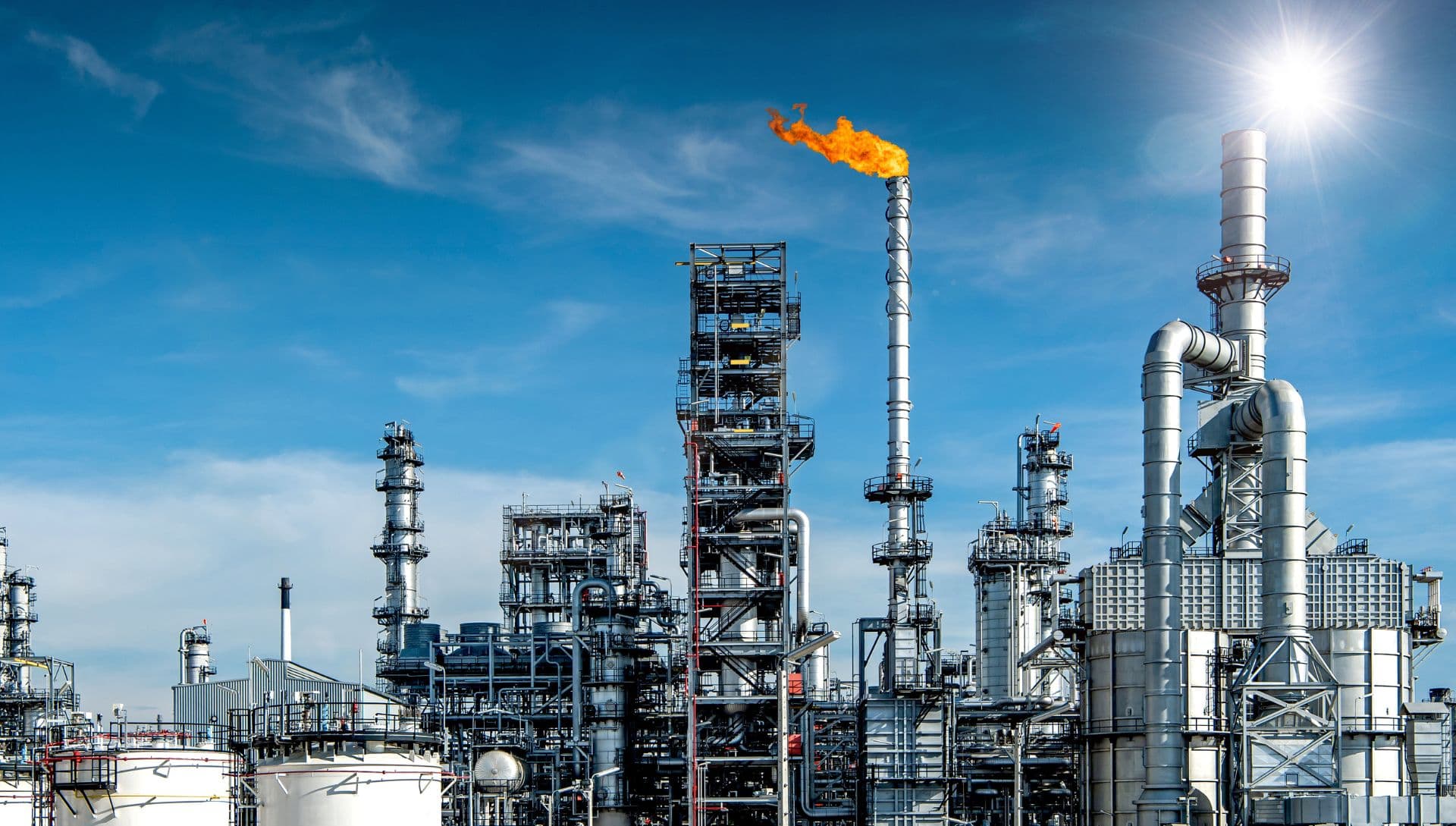
- Refineries that convert crude oil into usable products
- Commercial and retail systems that deliver energy to consumers and businesses
What makes Oil & Gas unique is scale. Decisions taken today often impact billions of dollars, thousands of jobs, national energy security, and environmental outcomes for decades.
Why the Oil & Gas Industry Still Matters
Despite growing renewable energy adoption, Oil & Gas continues to play a foundational role in the global economy. It supports:
- Transportation systems (cars, trucks, ships, aviation)
- Electricity generation in many regions
- Manufacturing through chemicals and plastics
- Agriculture via fertilizers
- Infrastructure development
- National revenues in many countries
Even beyond energy, Oil & Gas provides critical raw materials that modern economies rely on daily.
Oil vs Natural Gas: Why the Difference Matters
Oil and natural gas are often grouped together, but they behave very differently.
- Oil is a liquid fuel, easy to transport globally, and refined into products like petrol, diesel, jet fuel, and lubricants.
- Natural gas is a gaseous fuel, often moved via pipelines or converted into LNG, and widely used for electricity, heating, and as a transition fuel.
From a business and policy perspective, oil markets are highly global and liquid, while gas markets are more regional and infrastructure-dependent.
How the Oil & Gas Industry Works (High-Level)
To manage its complexity, the industry is commonly divided into three broad segments:
Upstream
This is where oil and gas are found and produced. It involves exploration, drilling, and extraction — all under high uncertainty. Upstream carries the highest technical risk, highest capital investment, and greatest potential reward.
Midstream
This is about transportation and storage. Pipelines, tankers, terminals, and LNG facilities move oil and gas from production sites to refineries and consumers. Midstream focuses on reliability, safety, and logistics rather than discovery.
Downstream
This is where oil becomes usable products. Refineries convert crude oil into fuels and chemicals, and distribution networks deliver them to markets. Downstream operates closer to consumers and market demand.
Together, these segments form a tightly connected system. A disruption in one part affects the entire chain.
Why Oil & Gas Is a High-Risk, High-Stakes Industry
Risk is not a side topic in Oil & Gas — it is central to every decision. The industry deals with high pressures and temperatures, flammable and hazardous materials, remote and harsh environments, and large-scale industrial assets.
A single mistake can lead to major accidents, environmental damage, long-term shutdowns, and global regulatory changes. This is why Oil & Gas companies emphasize safety systems, strict procedures, and slow, deliberate decision-making.
What may look like bureaucracy from the outside is often risk discipline from the inside.
Why Oil & Gas Decisions Are Slow (And Why That's Intentional)
Oil & Gas is a long-cycle business. Projects often take years to plan, billions in upfront investment, and decades to deliver returns.
Once infrastructure is built, it cannot be easily reversed. Mistakes are expensive — financially, environmentally, and socially. This is why companies are cautious about capital allocation and strategic shifts. Speed matters — but safety, reliability, and resilience matter more.
Careers in the Oil & Gas Industry
Oil & Gas is not just for engineers. The industry employs professionals across:
- Engineering and operations
- Finance and commercial roles
- Risk, compliance, and safety
- Supply chain and procurement
- Consulting and transformation
- Digital, data, and cybersecurity
Digital, AI & the Future of Oil & Gas
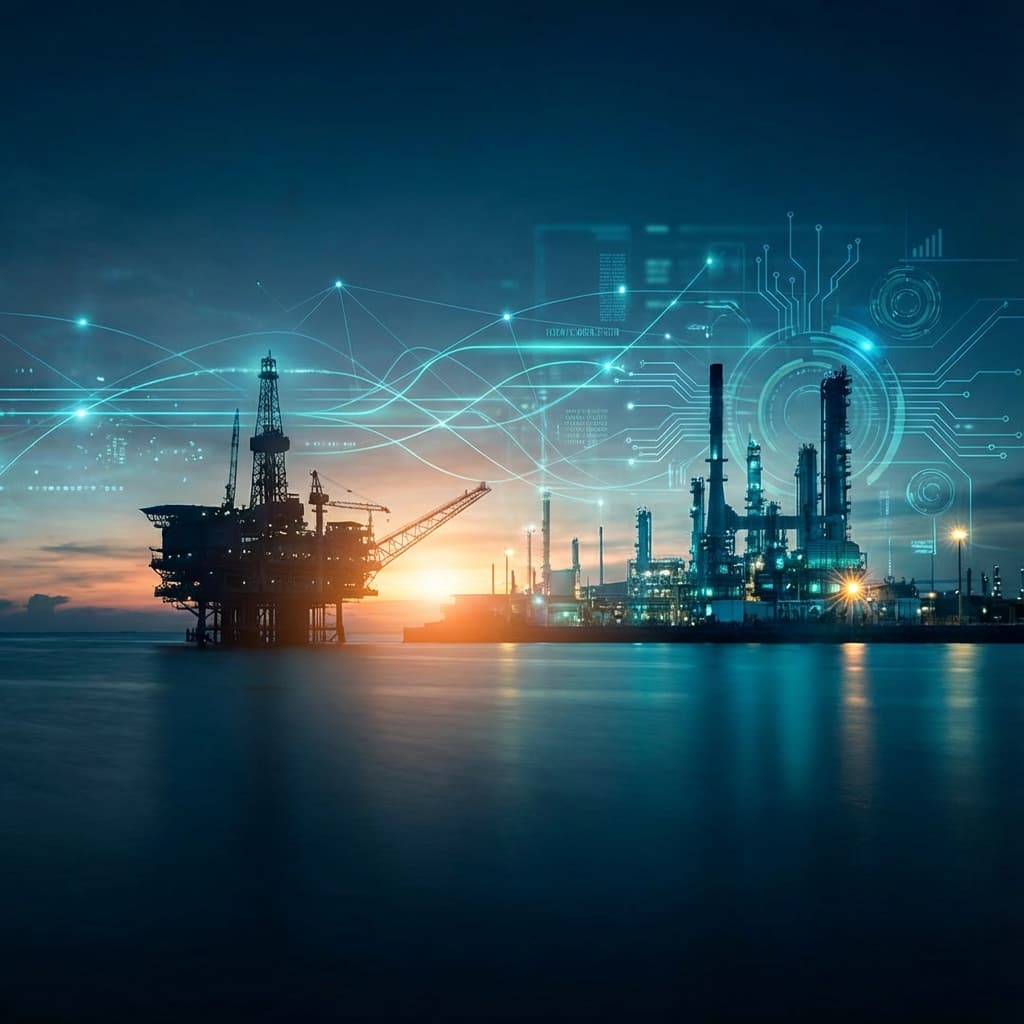
Oil & Gas is evolving — quietly and steadily. Digital technologies are used to monitor assets in real time, predict equipment failures, optimize production, and improve safety outcomes.
At the same time, energy transition is reshaping strategy with natural gas as a transition fuel, cleaner operations, carbon management technologies, and investments beyond traditional hydrocarbons.
Tags
Share this article

Omnivance Research Team
Dedicated to bridging the gap between education and industry requirements.
Related Courses
Deepen your knowledge with these recommended courses