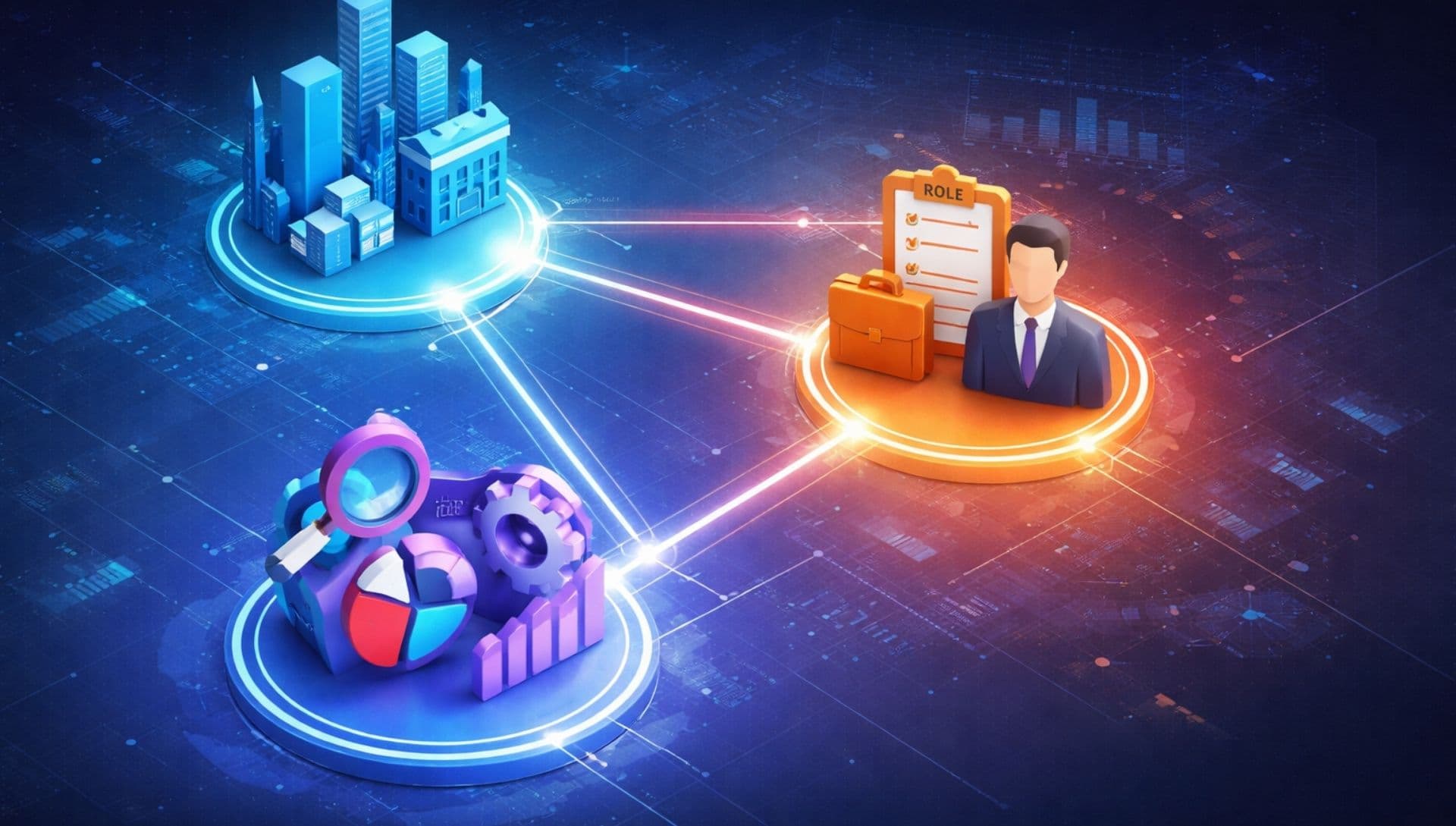

Many professionals believe that career growth depends primarily on experience, certifications, or technical skills. While these factors are important, they often overlook a deeper structure that actually determines how careers evolve inside organizations. In reality, most successful professionals understand three fundamental dimensions of work: Industry, Function, and Role.
These three elements form the foundation of what can be called a Career Intelligence Framework, a structured way of understanding how organizations operate and where professionals create value. When professionals clearly understand these three dimensions, they make better career decisions, transition between roles more effectively, and grow faster in their professions.
Why Career Understanding Is Becoming More Important
Modern careers are becoming increasingly complex as industries evolve, technologies change, and organizations restructure roles. Professionals are expected not only to perform their tasks but also to understand how their work contributes to the broader business ecosystem.
Several global workforce studies highlight this shift. According to the World Economic Forum, nearly 44% of workers’ core skills are expected to change by 2027 as industries adopt new technologies and new business models. Similarly, research by LinkedIn shows that professionals who develop cross-functional and industry knowledge are significantly more likely to transition into leadership roles compared to those who specialize only in narrow technical domains. Insights from McKinsey & Company also suggest that organizations increasingly value professionals who understand business context, industry dynamics, and cross-functional collaboration, not just technical capabilities.
These trends suggest that career success in the modern economy depends on more than skills alone. Professionals must also develop a structured understanding of industries, functions, and roles.
Understanding Industry
An industry represents the broader economic sector in which companies operate. It defines the products or services companies provide, the customers they serve, and the economic forces shaping the business.
Examples of industries include:
-
Retail
-
Banking and Financial Services
-
Healthcare
-
Manufacturing
-
Technology
-
Telecommunications
Each industry has its own value chains, revenue models, cost structures, regulations, and competitive dynamics.
For example, the retail industry focuses heavily on merchandising, supply chains, pricing strategies, and customer experience. In contrast, the banking industry revolves around financial products, regulatory compliance, and risk management.
Professionals who understand their industry's structure gain a significant advantage because they can anticipate business priorities and align their work with what the industry values most. Without industry knowledge, many professionals perform tasks without fully understanding how their work contributes to the larger business model.
Understanding Function
A function refers to the specialized department or capability within an organization that performs specific business activities.
Common business functions include:
-
Marketing
-
Sales
-
Finance
-
Operations
-
Human Resources
-
Data Analytics
-
Information Technology
Functions exist across almost every industry, but the way they operate can vary significantly depending on the industry context.
For example, marketing in a consumer goods company may focus on brand building and distribution channels, while marketing in a B2B technology company may focus more on demand generation and product education.
Similarly, operations in manufacturing revolves around production efficiency, whereas operations in retail focuses on inventory management and store performance. Understanding functions helps professionals recognize how organizations structure work and responsibilities.
Understanding Role
A role represents the specific position or level of responsibility that a professional holds within a function.
Examples of roles include:
-
Business Analyst
-
Data Analyst
-
Senior Consultant
-
Marketing Manager
-
Product Manager
-
Finance Controller
Roles define the scope of decision-making, accountability, and expected outcomes for a professional.
Two people may work in the same function but have very different roles. For instance, a data analyst and a data science manager both operate within analytics but contribute at different levels of responsibility.
Similarly, the same role can exist across different industries and functions. For example, a business analyst may work in healthcare, banking, retail, or technology companies, but the context and problems they solve will vary depending on the industry. Understanding roles helps professionals develop the skills, judgment, and experience required to move from junior to senior positions.
How Industry, Function, and Role Work Together
Many professionals focus only on their job title or role while ignoring the industry and functional context surrounding their work. However, organizations operate at the intersection of these three dimensions.
A professional’s work can be understood through the following structure:
Industry → Function → Role
| Industry | Function | Role |
|---|---|---|
| Retail | Analytics | Business Analyst |
| Banking | Risk | Risk Analyst |
| Healthcare | Operations | Operations Manager |
| Technology | Product | Product Manager |
This structure explains why two professionals with the same job title can have completely different career experiences depending on their industry and function.
The Career Intelligence Model
Understanding industries, functions, and roles individually is useful. However, true career clarity emerges when these elements are viewed together as part of a broader model. The Career Intelligence Model explains that professional growth does not depend on just one dimension of knowledge. Instead, it develops across multiple layers that build on each other.
At the foundation lies an understanding of how businesses operate. On top of that comes knowledge of industries, functions, and roles, followed by future capabilities and professional skills. Together, these layers create a holistic view of how careers evolve in modern organizations.
The Five Layers of Career Intelligence
| Layer | What It Means | Why It Matters |
|---|---|---|
| Business Foundations | Understanding how businesses create value | Helps professionals see the bigger picture |
| Industry Intelligence | Understanding how industries operate | Helps align work with industry priorities |
| Functional Intelligence | Understanding departments such as marketing, analytics, or finance | Helps professionals contribute effectively |
| Role Intelligence | Understanding responsibilities at different career levels | Helps professionals grow into leadership |
| Next Intelligence | Understanding technologies such as AI, data, and automation | Helps professionals stay future-ready |
Each layer builds on the previous one. Professionals who develop knowledge across all these dimensions tend to make better decisions and create greater impact within organizations.
Why Many Professionals Struggle with Career Growth
One of the biggest reasons professionals plateau in their careers is that they develop expertise in only one dimension of this framework.
For example:
-
Some professionals focus only on tools and technical skills, ignoring industry context.
-
Others understand their industry but lack functional depth.
-
Some gain experience in a role but struggle to transition into broader responsibilities.
Career growth typically accelerates when professionals build awareness across all three dimensions. They begin to understand how industries operate, how functions create value, and how roles evolve within organizations. This broader perspective allows professionals to move beyond task execution and contribute to strategic decision-making.
How Professionals Can Build Career Intelligence
Developing career intelligence does not require decades of experience. Professionals can accelerate their understanding by actively learning about industries, functions, and roles.
Some practical steps include:
-
Studying how different industries generate revenue and manage costs
-
Understanding how organizations structure business functions
-
Learning how roles evolve from entry-level positions to leadership
-
Observing how senior professionals connect strategy with execution
Professionals who invest time in understanding these dimensions develop a much clearer picture of how businesses operate.
Related Learning
If you want to build stronger career intelligence, explore these learning paths:
Business Basics - How Companies Work?
Behind the App – Understanding Digital Businesses
These courses help professionals understand how industries, functions, and roles interact in real business environments.
Final Thoughts
Careers rarely grow by accident. They evolve when professionals understand how their work fits into the larger structure of organizations.
The Industry–Function–Role framework provides a powerful way to view careers with clarity and direction.
When professionals combine industry awareness, functional expertise, and role maturity, they develop what can truly be called career intelligence.
And in a world where industries, technologies, and jobs are constantly evolving, career intelligence may become one of the most valuable advantages a professional can build.
FAQs
What is the difference between industry, function, and role?
An industry refers to the economic sector where companies operate. A function represents a department within a company such as marketing or finance. A role refers to the specific job position and responsibilities a professional holds within a function.
Why is industry knowledge important for career growth?
Industry knowledge helps professionals understand how companies generate revenue, what challenges businesses face, and what skills are most valuable in that sector.
Can the same role exist across multiple industries?
Yes. Roles such as analysts, managers, consultants, and engineers exist across many industries, but the context of their work varies depending on the industry.
What is career intelligence?
Career intelligence refers to the ability to understand how industries, functions, and roles interact within organizations, enabling professionals to make smarter career decisions and grow faster.
People Also Ask
What is the difference between industry knowledge and job skills?
Job skills refer to the specific technical or functional abilities required to perform tasks in a role. These may include analytical skills, programming languages, financial modeling, marketing tools, or project management techniques. Industry knowledge, on the other hand, refers to an understanding of how businesses operate within a particular sector, including revenue models, competitive dynamics, regulations, and value chains. Professionals who combine both job skills and industry knowledge are often able to make better strategic decisions and contribute more effectively to organizational goals.
Why do professionals struggle to transition between industries?
Many professionals build deep expertise in a specific role or function but do not develop an understanding of how different industries operate. When they attempt to switch industries, they may find that the business models, customer expectations, and operational priorities are very different. Developing industry intelligence helps professionals adapt their functional expertise to new sectors and makes career transitions easier.
What is functional expertise in a career?
Functional expertise refers to the knowledge and capabilities developed within a specific business function such as marketing, finance, analytics, operations, or human resources. Professionals build functional expertise by working on projects, solving business problems, and gaining experience within that domain. However, functional expertise becomes more valuable when combined with industry knowledge and role maturity, because it allows professionals to apply their skills in a broader business context.
Why is career intelligence important for professionals?
Career intelligence helps professionals understand how organizations operate and how different elements of work connect with each other. When professionals understand industries, functions, and roles together, they can make more informed career decisions, identify growth opportunities, and develop skills that align with business needs. This broader understanding often leads to faster career progression and stronger professional impact.
Explore More Career Intelligence Topics
-
What Is an Industry Value Chain?
-
How Industries Make Money – Revenue & Cost Structures
-
Why Industry Knowledge Is the Real Career Accelerator
-
Industry Literacy: The Missing Link Between Degrees and Jobs
Tags
Share this article
Omnivance Research Team
Dedicated to bridging the gap between education and industry requirements.
Related Courses
Deepen your knowledge with these recommended courses