
A young engineering graduate once asked a senior semiconductor leader a question that many students quietly wonder about: "If I join the semiconductor industry today, where could my career take me over the next twenty years?"
The leader smiled before answering. "You're asking the wrong question," he said. "Don't ask where your career will take you. Ask who you will become while building it."
At first, the answer sounded philosophical. Years later, after leading global engineering teams, solving manufacturing problems, working with customers across continents, and mentoring young professionals, the graduate finally understood what the mentor had meant. Careers in semiconductors are rarely defined by job titles alone. They are shaped by the capabilities professionals build, the problems they learn to solve, and the value they create for people they may never meet.
That is one of the remarkable characteristics of the semiconductor industry. Unlike industries where the final product is immediately visible, semiconductor professionals often spend years designing and manufacturing technologies hidden inside products that millions of people use every day. A small improvement in a chip's power efficiency can extend a smartphone's battery life. A breakthrough in automotive electronics can make vehicles safer. A more reliable medical processor can help doctors save lives. Engineers working inside fabrication facilities, design centers, testing laboratories, packaging facilities, and supply chain organizations may never meet the end customer, yet their work quietly powers the modern world.
Understanding this reality changes the way we think about careers. A successful semiconductor career is not simply about becoming a senior engineer, a manager, or an executive. It is about continuously expanding your ability to solve increasingly complex technical, business, and human challenges.
A Career Begins Long Before the First Job
Every career starts with curiosity before it starts with employment.
Imagine a university student fascinated by artificial intelligence. Initially, they may believe AI exists mainly because of software. During a classroom discussion, however, a professor explains that every AI model, cloud platform, autonomous vehicle, medical imaging system, industrial robot, and advanced smartphone ultimately depends on semiconductor technology. Without increasingly powerful chips, modern artificial intelligence simply would not exist.
That single realization often changes everything.
The student begins exploring how chips are designed, how billions of microscopic transistors fit onto silicon, how wafers are manufactured inside highly controlled cleanrooms, and why precision measured in nanometers can determine the success of an entire product generation. What began as curiosity gradually becomes purpose.
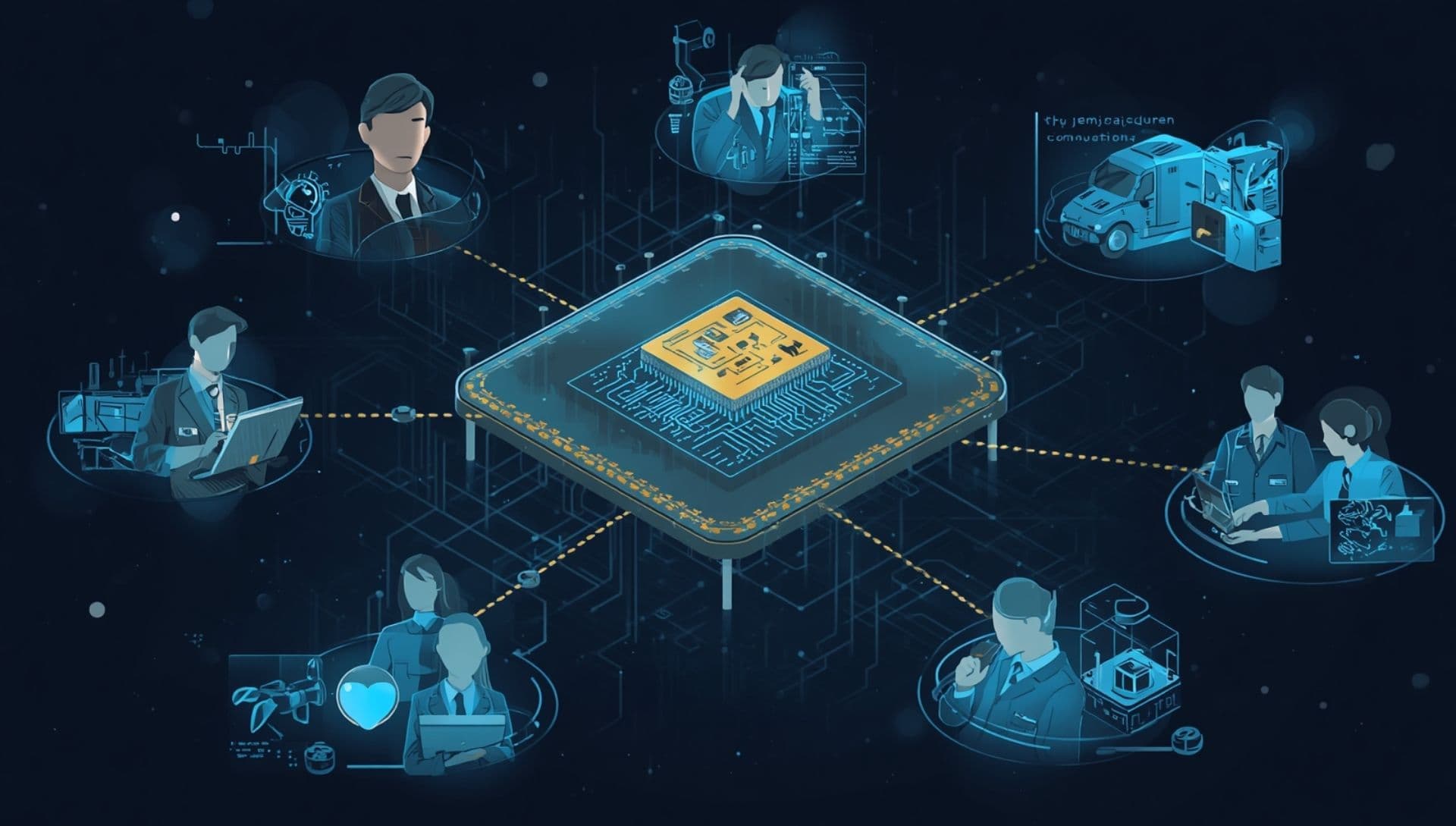
This is also the stage where many professionals discover an important truth. The semiconductor industry is not one profession but an ecosystem of interconnected disciplines. Chip architects imagine new possibilities. Design engineers translate ideas into circuits. Verification engineers ensure designs work correctly. Process engineers refine manufacturing steps. Equipment engineers maintain incredibly sophisticated machines. Quality specialists improve reliability. Packaging engineers prepare chips for real-world applications. Supply chain teams ensure global coordination, while product managers connect engineering innovation with customer needs.
Although these roles appear different, they all contribute to one shared mission: creating technology that is reliable enough to power the world's most critical systems.
Career Insight
Your first career decision should not be choosing the highest-paying role. It should be choosing an industry whose problems you will still enjoy solving ten years from now.
As professionals enter their first role, they quickly discover that university education provides only the foundation. The workplace introduces a completely different kind of learning. Instead of solving textbook problems with known answers, engineers now face manufacturing defects that appear unexpectedly, production equipment that behaves differently under changing conditions, customer requirements that evolve rapidly, and products that must perform reliably for years.
Consider a new process engineer working inside a wafer fabrication facility. During the first few weeks, most tasks involve observation. Experienced engineers explain why every manufacturing step must remain tightly controlled, why even microscopic contamination can reduce production yield, and why improving a manufacturing process by a fraction of a percent can translate into millions of dollars in additional revenue.
Initially, the new engineer focuses on following procedures accurately. Over time, however, something changes. They begin asking different questions. Instead of asking, "What should I do?" they begin asking, "Why does this process behave this way?"
That shift marks one of the most important moments in any professional career.
Knowledge has started transforming into analytical thinking.
As experience grows, technical competence becomes only one part of daily work. Semiconductor engineering is highly collaborative. Chip designers depend on verification teams. Manufacturing engineers rely on equipment specialists. Packaging engineers coordinate closely with testing teams. Product managers balance customer expectations with engineering constraints. Supply chain professionals work across multiple countries to ensure materials arrive precisely when needed.
No individual builds a modern semiconductor product alone.
Professionals who succeed learn to communicate complex ideas clearly, listen carefully to colleagues with different expertise, and appreciate that solving difficult problems usually requires multiple perspectives. A yield improvement project, for example, might involve process engineering, quality assurance, equipment maintenance, data analytics, suppliers, and manufacturing leadership working together toward a common objective.
The ability to collaborate gradually becomes just as valuable as technical excellence.
Career Progression Roadmap
Career Phase | Primary Focus | Capability Being Built |
Curiosity | Understanding the industry | Learning mindset |
Foundation | Technical knowledge | Engineering fundamentals |
Early Career | Execution | Technical discipline |
Professional Growth | Problem-solving | Analytical thinking |
Mid-Career | Business understanding | Customer and commercial awareness |
Leadership | Team success | Coaching, influence, decision-making |
Industry Impact | Innovation and transformation | Strategic thinking |
Lifelong Growth | Continuous learning | Reinvention and industry influence |
Several years into a career, another transformation begins to take place.
Imagine a design engineer participating in a product review meeting. Earlier in their career, success meant completing assigned design tasks accurately. Now the discussion revolves around market launch schedules, manufacturing costs, customer expectations, supply chain risks, and product competitiveness.
Suddenly, engineering decisions cannot be separated from business decisions.
A design that improves performance by five percent may not be commercially attractive if manufacturing costs increase significantly. A manufacturing improvement that reduces defects may shorten delivery times, strengthening customer relationships. A packaging innovation might enable entirely new applications in autonomous vehicles or healthcare devices.
Professionals begin realizing that every technical decision has business consequences, and every business strategy depends upon sound engineering.
This broader perspective fundamentally changes career growth. Engineers start asking not only whether something can be built, but whether it should be built, how customers will benefit, and how organizations create sustainable value through technology.
Artificial intelligence is increasingly becoming part of this journey. Modern semiconductor companies use AI to analyze manufacturing data, optimize equipment maintenance, accelerate chip verification, improve design exploration, and identify process variations that humans might overlook. Yet experienced professionals understand that AI does not replace engineering judgment. Instead, it allows engineers to spend less time searching for patterns and more time understanding their significance, evaluating trade-offs, and making informed decisions.
The relationship between human expertise and artificial intelligence is becoming one of partnership rather than competition.
As careers continue evolving, responsibilities extend beyond individual contributions. Professionals begin mentoring graduate engineers, coordinating multidisciplinary projects, resolving customer escalations, and leading improvement initiatives that influence entire organizations.
Consider a manufacturing leader facing declining production yield. Years earlier, they might have personally analyzed every process parameter. Today, they guide a cross-functional team that includes data scientists, equipment engineers, process specialists, quality experts, suppliers, and production managers. Success depends less on having every answer and more on creating an environment where the best answers can emerge.
Leadership in semiconductors therefore becomes an exercise in enabling others.
The best leaders ask thoughtful questions, encourage experimentation, remove obstacles, develop future talent, and connect technical decisions with long-term business objectives. They understand that innovation grows in cultures where people feel safe sharing ideas, learning from mistakes, and continuously improving together.
Eventually, experienced professionals begin contributing beyond their organizations. Some influence industry standards. Others help universities design better engineering programs. Many mentor startups developing next-generation semiconductor technologies. Some guide global collaborations on advanced packaging, chiplets, sustainable manufacturing, quantum computing, or resilient supply chains.
Interestingly, by this stage, their influence comes less from authority and more from accumulated credibility.
They have earned trust because they consistently solved meaningful problems, developed other professionals, embraced continuous learning, and remained curious even after decades of experience.
This may be the most important lesson the semiconductor industry teaches. Technology changes relentlessly. Process nodes shrink. Manufacturing techniques evolve. AI capabilities expand. New materials emerge. Markets shift. Customer expectations increase.
The professionals who thrive are rarely those who know everything.
They are the ones who never stop learning.
Mentor Advice
Every five years, your greatest competitive advantage should not be what you already know. It should be your ability to learn what the industry needs next.
Looking back over two decades, the graduate who once asked about career progression no longer measures success by promotions alone. The milestones that matter most are different. The first complex manufacturing issue solved independently. The first product successfully released. The first customer problem resolved through teamwork. The first engineer mentored into leadership. The first strategic decision that shaped an entire business direction.
These moments reflect something deeper than career advancement. They reflect capability.
In the semiconductor industry, capability compounds much like technological innovation itself. Each challenge develops judgment. Each project strengthens collaboration. Each customer interaction builds business understanding. Each mentoring conversation creates future leaders. Over time, these experiences transform professionals from individual contributors into architects of technological progress.
The world's appetite for computing power, intelligent systems, connected devices, advanced healthcare, clean energy, and autonomous technologies continues to grow. Behind every one of these innovations stands a semiconductor ecosystem requiring engineers, scientists, business leaders, manufacturing specialists, quality professionals, researchers, and innovators who are willing to keep learning long after formal education ends.
That is why a career in semiconductors is not simply a career in technology.
It is a lifelong journey of building knowledge, creating value, solving problems that matter, and contributing to innovations that quietly improve billions of lives.
Final Takeaway
Titles may open doors, but capabilities determine how far you travel once you walk through them. In the semiconductor industry, long-term success belongs to professionals who remain curious, strengthen both technical and business understanding, embrace collaboration, adopt new technologies thoughtfully, and never lose the desire to learn.
"The strongest careers are not built by climbing organizational ladders. They are built by continuously expanding the value you create for technology, business, society, and the people who grow alongside you."
Reflection
If your career were measured not by your current designation but by the capabilities you have developed over the last three years, what would your greatest strengths be—and what is the next capability that will shape the next chapter of your journey?
Next in your Omnivance learning journey: Skills Required in the Semiconductor Industry, where we will explore the technical, business, analytical, communication, leadership, and AI capabilities that enable professionals to build the kind of career described in this roadmap.
Tags
Share this article

Omnivance Research Team
Dedicated to bridging the gap between education and industry requirements.
Related Courses
Deepen your knowledge with these recommended courses